
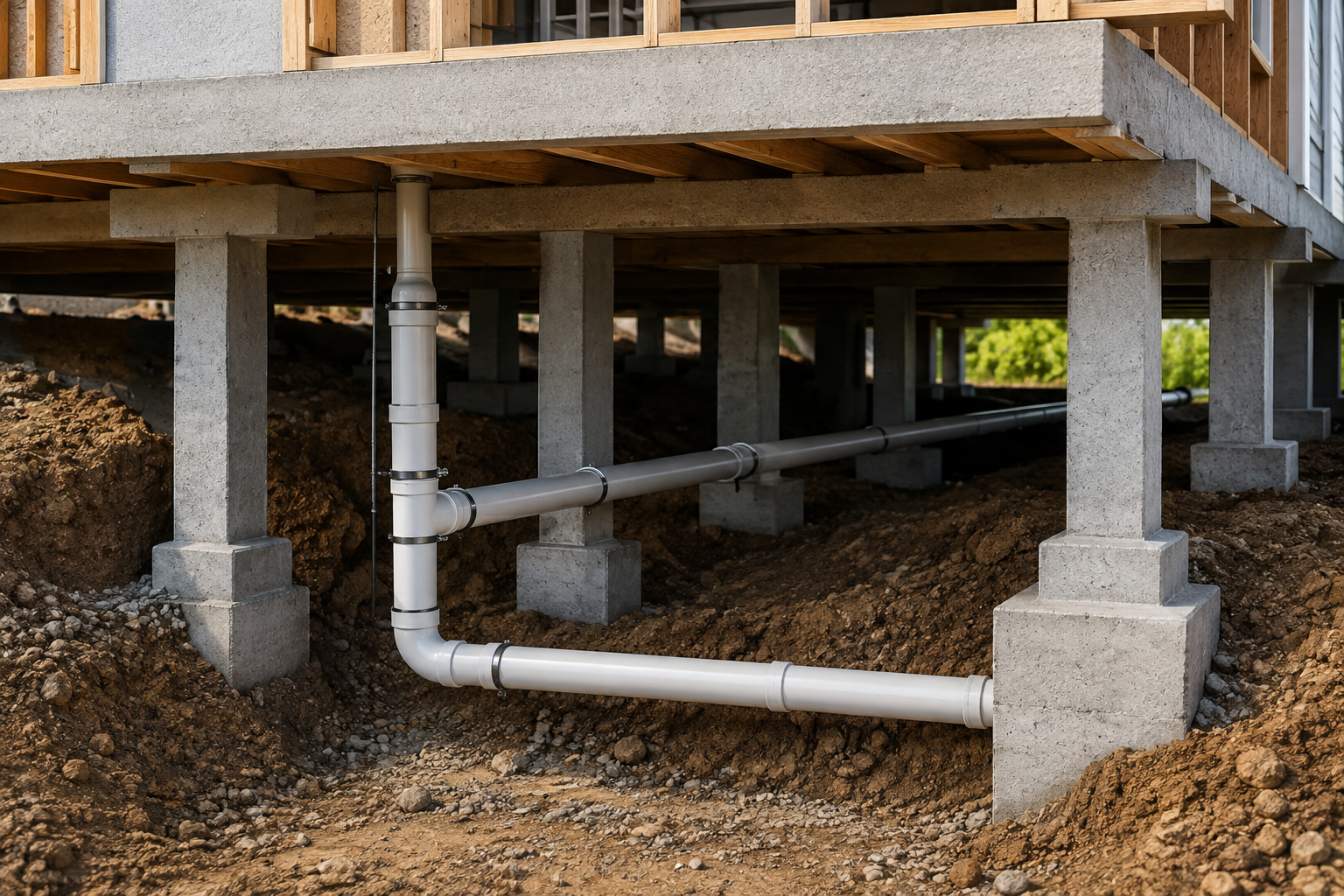
Suspended foundation systems can provide an effective solution for buildings constructed on expansive, unstable, or otherwise challenging soil conditions. However, these foundation systems require careful coordination between structural engineering, geotechnical conditions, and plumbing design.
One area that deserves particular attention is plumbing beneath or passing through a suspended foundation. Improperly designed plumbing connections, insufficient clearance, soil movement, and poor coordination between building systems can contribute to damaged pipes, water leaks, foundation concerns, and expensive repairs.
Understanding how suspended foundations interact with plumbing systems can help owners, developers, contractors, and design teams reduce risk before construction begins.
A suspended foundation or suspended structural slab is designed so that portions of the building floor system are structurally supported rather than relying directly on the underlying soil.
These systems may be recommended where soil conditions make conventional slab-on-grade construction less desirable. Expansive soils, for example, can change volume as moisture conditions fluctuate. If the structure and its utilities are not designed to accommodate anticipated movement, stresses can develop over time.
Depending on the project, a suspended foundation may incorporate structural slabs, grade beams, piers, drilled shafts, piles, or other engineered foundation components.
The appropriate system should be determined based on the project's geotechnical investigation, structural loads, site conditions, and performance requirements.
Plumbing lines do not necessarily move in the same way as a suspended structure.
A building foundation may be designed to accommodate or isolate itself from certain soil movements, while underground pipes remain surrounded by soil. This creates the potential for differential movement between the structure and plumbing system.
If adequate allowances are not incorporated into the design, pipes and connections may experience additional stresses.
Potential problems can include:
This is why plumbing should be considered as part of the overall foundation design process rather than treated as an isolated building system.
Expansive soils are particularly important when evaluating suspended foundations.
Certain clay-rich soils can swell when moisture increases and shrink when they dry. This repeated movement can create significant changes in the ground beneath and around a building.
A suspended foundation may be engineered to reduce the structure's exposure to this movement. However, plumbing located within the active soil zone may still be affected.
Geotechnical engineers evaluate subsurface conditions to help determine factors such as soil composition, moisture conditions, potential movement, bearing characteristics, and other site-specific considerations. These findings provide important information for structural engineers and other design professionals.
Suspended foundation systems may incorporate a void or separation between the structural floor and underlying soil.
This space allows the soil to move without directly applying the same forces to the suspended structural system.
Plumbing penetrations and utility lines must therefore be carefully detailed so they do not compromise the intended performance of the foundation. Appropriate clearances, sleeves, flexible connections, or other engineered details may be required depending on the project.
The specific solution should always be determined by the project's qualified design professionals.
One of the most effective ways to reduce plumbing and foundation problems is early coordination.
Structural engineers, geotechnical engineers, architects, plumbing designers, contractors, and other project stakeholders should understand how the building systems interact before construction begins.
Important considerations can include plumbing penetration locations, pipe routing, foundation beams, structural elements, expected soil movement, accessibility for future repairs, and construction sequencing.
Discovering a conflict during design is typically far easier to address than discovering it after the foundation has been constructed.
For existing buildings, certain conditions may indicate that plumbing or foundation performance should be investigated.
Warning signs can include unexplained increases in water usage, recurring plumbing leaks, persistent moisture beneath the building, unusual odors, visible foundation movement, cracking, floor elevation changes, or plumbing systems that repeatedly require repair.
These symptoms do not automatically mean that a structural problem exists. However, they can justify further investigation to determine the underlying cause.
When problems occur in an existing building, a professional structural assessment can help determine whether observed conditions are related to the foundation, building structure, plumbing, soil movement, or a combination of factors.
Depending on the situation, an evaluation may involve reviewing existing construction information, observing visible structural conditions, documenting cracking or movement, considering available geotechnical information, and coordinating additional investigation when necessary.
The objective is to understand the condition before determining an appropriate repair strategy.
Foundation and plumbing problems can become expensive when they are discovered after construction.
A proactive engineering approach can help reduce that risk.
For new developments, this means understanding subsurface conditions before finalizing the foundation design and coordinating structural and plumbing systems early in the project.
For existing buildings, timely evaluations can help identify developing concerns before additional damage occurs.
With more than 50 years of engineering experience, Isbell Engineering Consultants provides structural and geotechnical engineering expertise for commercial, industrial, municipal, infrastructure, and development projects.
From subsurface investigations and foundation recommendations to structural assessments and engineering evaluations, our team helps project stakeholders make informed decisions based on actual site and structural conditions.
Planning a project or concerned about an existing foundation? Contact Isbell Engineering Consultants to discuss your structural and geotechnical engineering needs.
Copyright © 2026 Isbell Engineering Consultants - All Rights Reserved.
Made & Managed by North Texas Business Solutions