
Forensic Engineering for Foundation and Slope Failures: How a Geotechnical Investigation Works
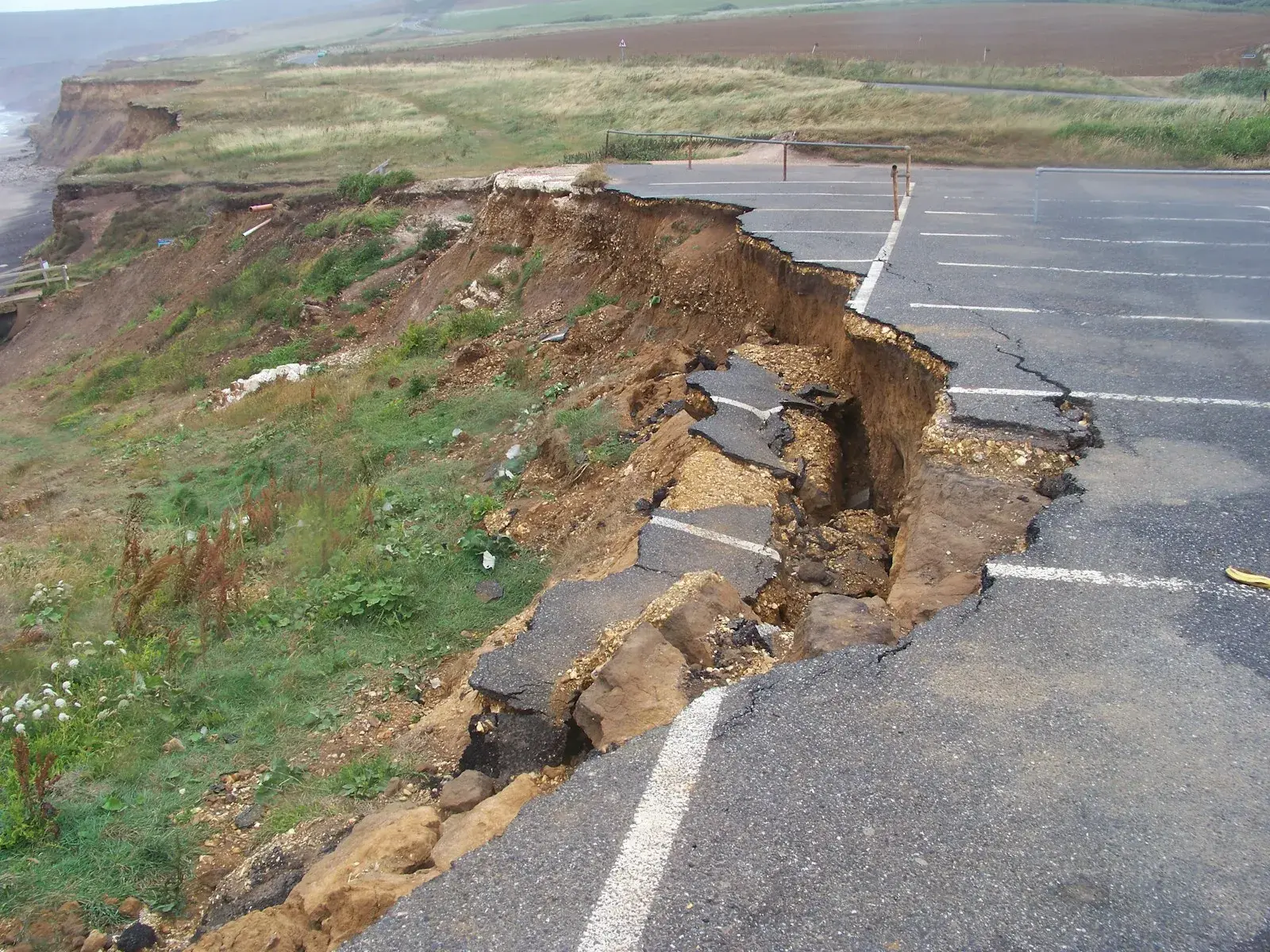
A slope failure pulling a paved car park over the edge. The scarp, the cracking pattern and the tilt of the broken slabs are all evidence a forensic investigation records before anything is moved. (Photo: Photo by Craig Chilton (@craggy53) on Unsplash · Unsplash License)
Forensic engineering is the work of finding out why something failed. ASCE's Forensic Engineering Division describes it as applying engineering principles to the investigation of failures or other performance problems, and that includes testifying about the findings when a dispute goes to court. On the geotechnical side, the "something" is usually the ground: a slab that heaved, a footing that settled, a retaining wall that leaned out or a slope that slid onto a parking lot.
The point of a forensic investigation is an answer you can defend. That means evidence, testing and calculations, not a walk-around opinion. This guide covers how a geotechnical failure investigation runs, what you should preserve before anyone starts repairs, and how expert witness work fits into Texas claims.
What geotechnical forensics actually covers
A geotechnical failure analysis looks at how the soil, rock and water under and around a structure behaved, and whether that behavior matched what the design assumed. The usual questions are:
- Did the soil do something the design didn't account for, such as swelling, shrinking, consolidating or losing strength when wet?
- Was the site built the way the plans and the geotechnical report said it should be (fill placement, compaction, moisture conditioning, drainage)?
- Did something change after construction: a broken water line, new irrigation, a blocked drainage swale, a tree line, an excavation next door?
- Was the original subsurface information adequate for the decisions made on it?
The answer is rarely a single cause. More often there is a primary cause and a few contributing factors, and the report has to sort out which is which.
Common geotechnical failures on North Texas sites
North Texas has a lot of highly plastic clay. The Houston Black series, a common Blackland Prairie soil, is described by USDA NRCS as a smectitic clay that cracks 1.25 to 10 cm wide and 30 cm or deeper when it dries out. Clay like that swells when it gets wet and shrinks when it dries, and the 2021 International Building Code (§1803.5.3) treats a soil as expansive when it meets index criteria that include a plasticity index of 15 or more. Movement from that shrink-swell cycle is behind a large share of foundation complaints in the region.
Slopes are the other big category. USGS separates slides into rotational slides, where the failure surface curves upward like a spoon, and translational slides, where the mass moves along a roughly planar surface. Clay slopes on cut banks, detention pond side slopes and fill embankments tend to show the rotational kind, with a curved scarp at the top and a bulging toe at the bottom.
| What you see | Possible geotechnical causes | What the investigation checks |
|---|---|---|
| Slab or floor cracks with doors and windows binding | Clay swell or shrink, plumbing leak, poor drainage at the perimeter | Elevation survey, moisture and plasticity testing in borings, plumbing test records, grading around the building |
| Footing or column settlement | Soft or poorly compacted fill, consolidation, bearing on the wrong stratum | Original fill density test records, borings beside the footing, comparison with the design bearing pressure |
| Retaining wall rotation or bulging | Saturated clay backfill, failed drainage, surcharge behind the wall, undersized reinforcement | Backfill type, weep and drain condition, wall geometry against the drawings, water levels |
| Slope slide with a curved scarp | Wet-season strength loss in clay, steepened slope, water from irrigation or a leaking line | Slope geometry, borings through the slide mass, groundwater readings, back-analysis of slope stability |
| Pavement cracking and pumping | Weak or unstabilized subgrade, water entering the base, heavy traffic over design | Subgrade testing, pavement section cores, drainage at the pavement edge |
How a geotechnical failure investigation runs
Every case is different, but most follow the same sequence. Expect the engineer to go from paper to site to lab to analysis, and to change course if the evidence points somewhere unexpected.
| Step | What happens | What you get out of it |
|---|---|---|
| 1. Intake and conflict check | Scope, deadlines, parties involved; the engineer confirms there is no conflict with anyone in the dispute | A written scope and an evidence plan |
| 2. Document review | Original geotechnical report, foundation and grading plans, as-builts, compaction and concrete test records, prior repair reports, maintenance records | A timeline and a list of what the design assumed |
| 3. Site reconnaissance | Photos, crack mapping, a relative elevation survey, drainage observations, measurements of wall tilt or slope geometry | A documented record of current conditions |
| 4. Subsurface exploration | Borings or test pits, sampling, lab testing (moisture, Atterberg limits, swell, density, strength) | Data to compare against the original report |
| 5. Monitoring, if movement is ongoing | Settlement points, inclinometers in a moving slope, piezometers for groundwater | Rate and direction of movement over time |
| 6. Analysis | Back-analysis of the failed slope or wall, settlement or heave estimates, checks of the design against the actual soil | A cause supported by calculations |
| 7. Report | Findings, primary cause, contributing factors, and where appropriate, conceptual remediation | A document that can stand up to review by the other side's expert |
Back-analysis is worth explaining. When a slope has already failed, the engineer knows the factor of safety at the moment of failure was about 1.0. Working backward from the measured geometry and groundwater gives the soil strength that was actually mobilized, which is often lower than the design value. That number is then used to design the fix, so the repair isn't built on the same assumption that failed.
Preserve the evidence before repairs start
The first instinct after a failure is to fix it. That's understandable, but once the slab is mudjacked, the wall is rebuilt or the slide is regraded, a lot of evidence is gone. ASTM E1188 is the standard practice for how a technical investigator collects and preserves information and physical items after an incident that may end up in litigation. It stresses that evidence quality changes with time, so capturing it quickly matters.
Before work starts, try to do this:
- Photograph and video everything, with a scale in the frame and dates on the files.
- Keep removed materials (failed drain pipe, geogrid, wall units, concrete cores) tagged and stored, not hauled to a landfill.
- Pull and keep the original geotechnical report, plans, test reports and pay applications.
- Write down when the problem was first noticed and what has changed since (new irrigation, plumbing repairs, heavy rain).
- Tell the other parties, their insurers and your attorney before destructive work so they have a chance to document conditions.
- If the condition is unsafe, make it safe first. Shoring or a temporary barricade is fine; just document before and after.
Litigation support and expert witness work in Texas
Many forensic geotechnical cases end up in a claim, either against a contractor, a designer or an insurer. Texas has one rule in particular that owners and their attorneys should know about.
Under Texas Civil Practice and Remedies Code §150.002, a lawsuit or arbitration for damages arising out of professional services by a licensed engineer generally has to be filed with a certificate of merit. That is an affidavit from a third-party licensed professional engineer who holds the same license as the defendant, is licensed in Texas and practices in the same area. The affidavit has to set out, for each theory of recovery, the negligence or other error the claimant alleges. If it isn't filed as the statute requires, the claim is dismissed, and the dismissal may be with prejudice. There are timing provisions and exceptions, so this is a question for your attorney, not something to decide from an article.
An expert's job in a dispute is to give opinions grounded in the data, whoever is paying. A good forensic report reads the same whether it helps the client or not. If an engineer offers you a conclusion before looking at the site, find a different engineer.
Forensic investigation compared with a repair-company inspection
| Forensic geotechnical investigation | Repair contractor's inspection | |
|---|---|---|
| Purpose | Find the cause and contributing factors | Scope a repair the company sells |
| Subsurface data | Borings, lab tests, sometimes monitoring | Usually none |
| Deliverable | Sealed engineering report with analysis | Proposal or estimate |
| Use in a dispute | Built to be reviewed and challenged | Limited |
Both have their place. A repair estimate is useful once you know what you're fixing. The forensic step tells you if the repair targets the cause or only the symptom.
What to send a forensic engineer at first contact
You'll get a faster, more accurate proposal if you send:
- Address, building or structure type and approximate age.
- Photos of the damage and a short description of when it started.
- The original geotechnical report and foundation, grading and wall plans, if you have them.
- Any prior inspections, repair work or monitoring data.
- Whether a claim is filed or expected, the parties involved, and any deadlines your attorney has given you.
Read more about the related services on our geotechnical engineering services page, including site investigations and instrumentation and monitoring. If the question involves the building frame as well as the ground, see structural engineering services.
Talk to Isbell Engineering Consultants about a foundation or slope failure
Isbell Engineering Consultants, based in Valley View, Texas, lists geotechnical forensics and failure analysis among its geotechnical services, including investigations of foundation and slope failures and litigation support and expert witness services. If you're dealing with a failed slab, wall or slope, contact us with the documents above and we'll talk through what an investigation should cover. Common questions about how we work are on our FAQ page.
Frequently asked questions
What does a forensic engineer do?
A forensic engineer investigates why a structure, component or site failed or didn't perform as intended. On a geotechnical case that means reviewing the original design and records, documenting the site, drilling and testing the soil, running analysis and writing a report that identifies the cause and contributing factors. The engineer may also testify about those findings.
Is a forensic engineer the same as an expert witness?
Not always. Many forensic investigations never reach a courtroom; owners use them to decide on a repair or settle a claim. When a case is litigated, the engineer who did the investigation often serves as the expert witness and explains the findings in depositions or at trial.
Can the engineer who designed the foundation investigate its failure?
They can provide records and explain their design, but an independent engineer is usually the better choice for the forensic opinion. Independence avoids an obvious conflict and makes the findings more credible to the other parties.
How long does a geotechnical failure investigation take?
It depends on the scope. A document review and site visit can move quickly, while drilling, lab testing and especially monitoring a moving slope take longer. Ask for a schedule with the proposal and flag any legal deadlines up front.
Should I repair the damage before the investigation?
Make the area safe, but hold off on permanent repairs until the conditions are documented and the other parties have had a chance to look. Once a slab is lifted or a slope is regraded, much of the evidence is gone.
Sources
- ASCE Forensic Engineering Division (definition of forensic engineering)
- ASTM E1188 (current edition E1188-23), Standard Practice for Collection and Preservation of Information and Physical Items by a Technical Investigator
- Texas Civil Practice and Remedies Code §150.002, Certificate of Merit (Justia, 2022 statutes)
- FHWA NHI-06-088, Soils and Foundations Reference Manual (slope stability and back-analysis)
- USGS Fact Sheet 2004-3072, Landslide Types and Processes
- 2021 International Building Code, Chapter 18 Soils and Foundations (§1803.5.3 expansive soil)
- USDA NRCS Official Series Description, Houston Black series
Image credits
- Ground movement at the edge of a slope has broken up an asphalt car park, with slabs of pavement dropping toward the scarp. Photo: Photo by Craig Chilton (@craggy53) on Unsplash · Unsplash License
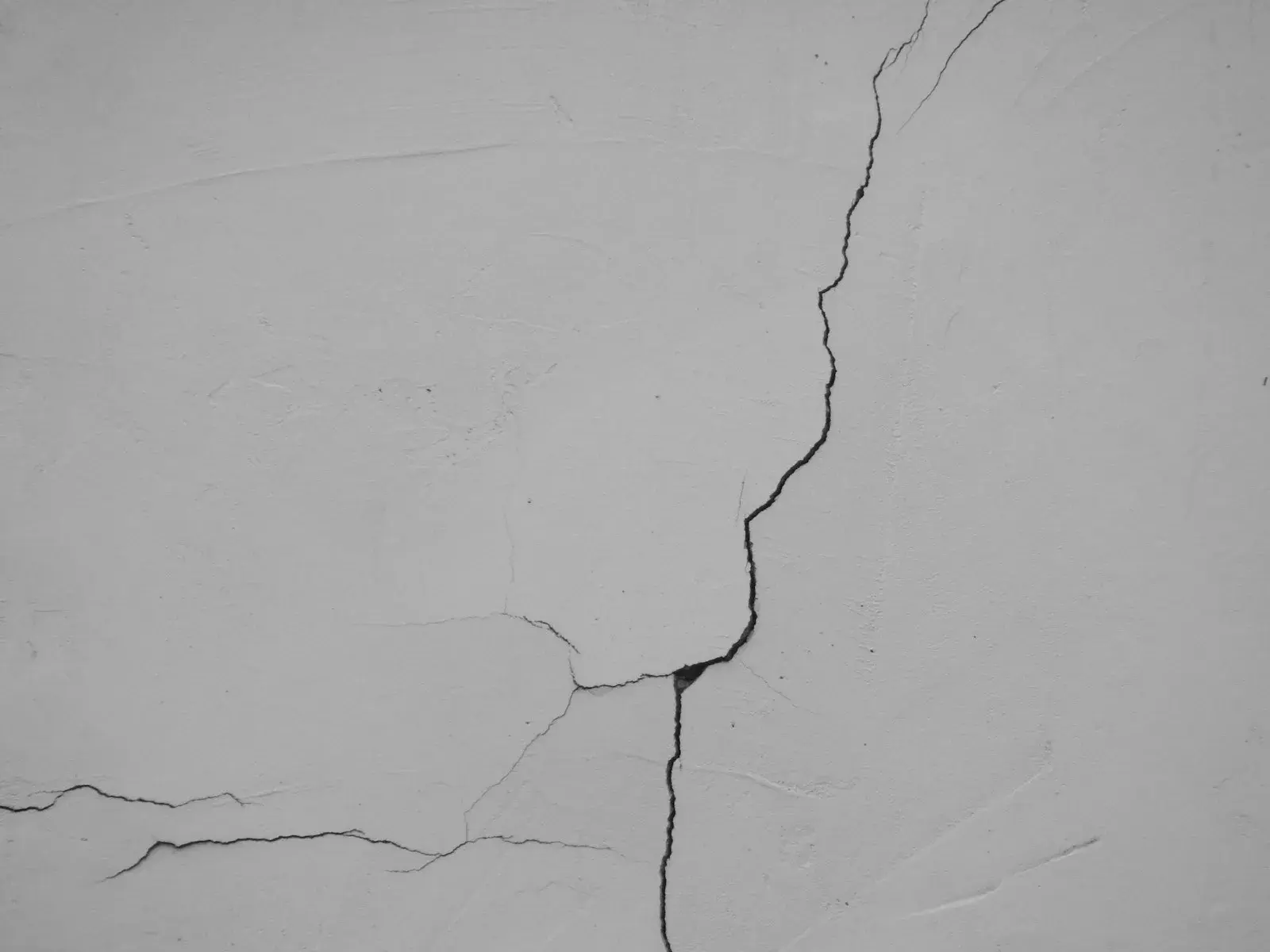
- A branching crack running across a white plastered wall. Photo: Photo by Lallaoke (@lallaoke) on Unsplash · Unsplash License
Related articles
Copyright © 2026 Isbell Engineering Consultants - All Rights Reserved.
Made & Managed by North Texas Business Solutions