
Platting Land in Texas: Preliminary Plat, Final Plat and Replat Explained
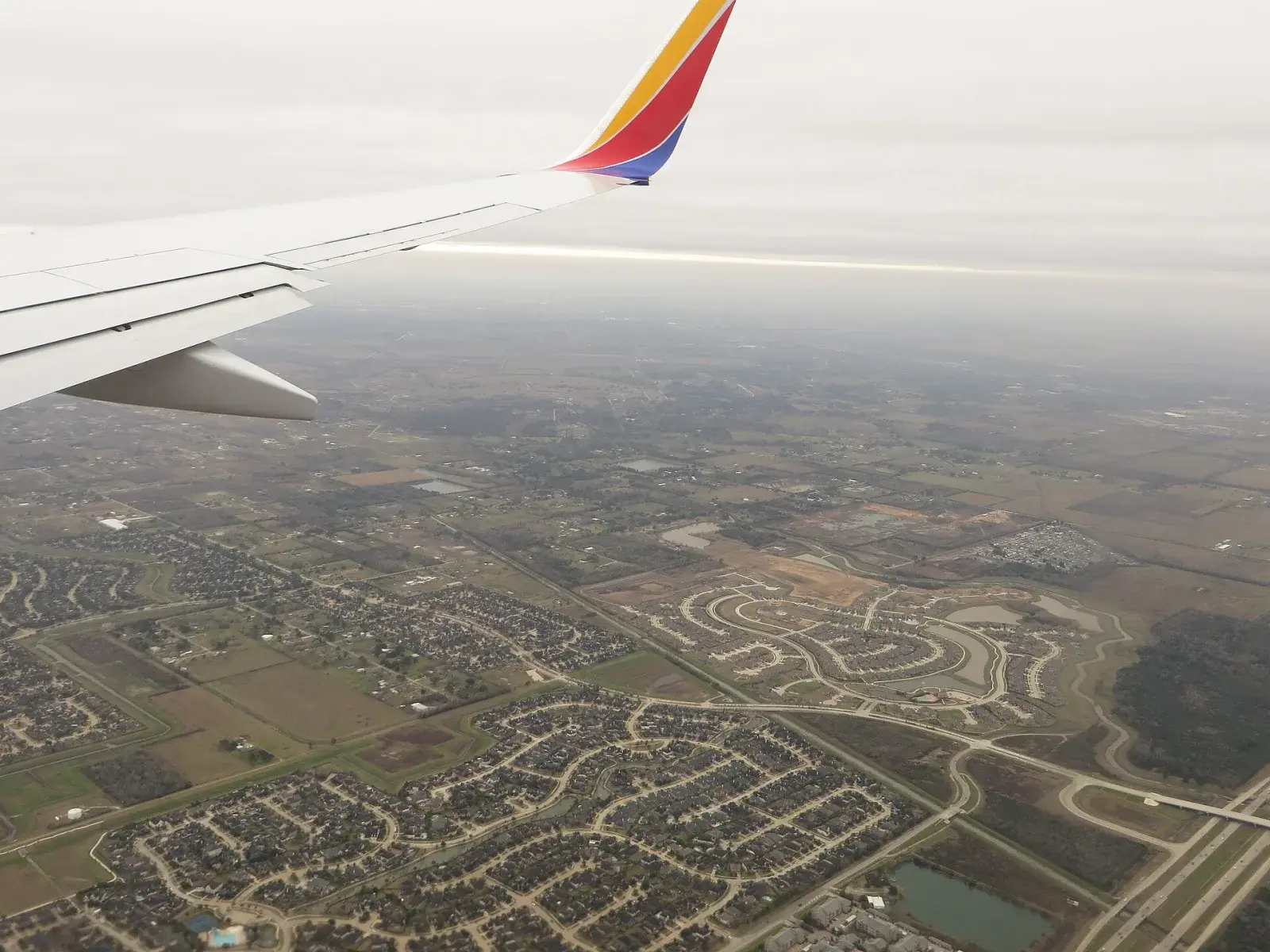
New subdivisions near Pearland, Texas. Every lot, street and drainage easement in a development like this starts on a recorded plat. (Photo: Ken Lund from Reno, Nevada, USA · CC BY-SA 2.0 · cropped and resized)

Platting is the legal process of dividing land into lots, blocks and streets and recording that division with the county. In Texas, if you split a tract into two or more parts inside a city or its extraterritorial jurisdiction (ETJ), state law generally requires a plat. A plat is also generally required in unincorporated county areas, under a separate chapter of the law. Cities and counties must act on a complete plat application within 30 days. Knowing how that clock works, and who prepares which documents, is most of what a landowner or developer needs to plan a schedule.
When is a plat required in Texas?
Two chapters of the Texas Local Government Code split the job:
| Inside a city or its ETJ | Unincorporated county | |
|---|---|---|
| Statute | Chapter 212 | Chapter 232 |
| Trigger | Owner "divides the tract in two or more parts" to lay out lots, streets or other public areas (§212.004(a)) | Owner of land "outside the limits of a municipality" divides "the tract into two or more parts" (§232.001(a)) |
| Who approves | City planning commission or city council, or staff where delegated (§212.0065) | Commissioners court |
| Decision deadline | 30 days after the plat is filed (§212.009(a)) | 30 days after a completed application is received (§232.0025(d)) |
| Where recorded | County clerk (§212.004(d)) | County clerk |
Chapter 212 has a notable exclusion. It doesn't apply to "a division of land into parts greater than five acres, where each part has access and no public improvement is being dedicated" (§212.004(a)). Chapter 232 and individual county rules have their own exceptions. Check them before assuming a large-lot split needs no plat.
Preliminary plat, final plat and replat
Texas law defines "plat" to include "a preliminary plat, final plat, and replat" (§212.001). Cities add their own types. Fort Worth, for example, lists concept, preliminary, final, minor, replat, amending, correction and vacated plats.
- Preliminary plat. It shows the proposed layout of lots, streets, easements and drainage before construction plans are final. It's where most of the design discussion happens. Cooke County, for example, requires complete construction plans for public improvements to be submitted with the preliminary plat.
- Final plat. This is the document that gets recorded. It shows exact lot dimensions, dedications, easements and certificates, and it's usually approved after public improvements are built or guaranteed.
- Replat. It changes all or part of an already recorded subdivision without vacating the original plat. Under §212.014, a replat must be signed and acknowledged only by the owners of the property being replatted, must be approved, and may not "amend or remove any covenants or restrictions."
- Amending plat. It covers minor fixes listed in §212.016, such as correcting "an error in a course or distance." Only the applicants sign it, and approval is simpler.
How the 30-day approval clock works
The 2019 and 2023 legislative sessions tightened the process. House Bill 3167 (2019) and House Bill 3699 (2023) are the two to know.
- Know what "complete" means. Since HB 3699, each city must publish "a complete, written list of all documentation" needed for a plat application, and an application with everything on that list "is considered complete" (§212.0081). Cities also "may not require an analysis, study, document… that is not explicitly allowed by state law" (§212.004(g)). Counties must post their document list online too (§232.0025(a)).
- File it. A plat is considered filed when the applicant submits the plat "along with a completed plat application and the application fees" (§212.004(f)). Cities may set submittal calendars.
- The 30-day decision. The city "shall approve, approve with conditions, or disapprove a plat within 30 days after the date the plat is filed." If it doesn't act, the plat is approved (§212.009(a)). An extension of up to 30 days is possible only at the applicant's written request (§212.009(b-2)).
- Written reasons. A conditional approval or a disapproval must come with a written statement that "clearly articulates each specific condition" or reason. Each one must cite the law it relies on and "may not be arbitrary" (§212.0091).
- The applicant responds. The applicant can answer the conditions in writing, and the city "may not establish a deadline" for that response (§212.0093).
- The second decision. The city must decide on the response within 15 days, or the plat is approved (§212.0095).
- Recording. The approved plat is filed with the county clerk.
In unincorporated areas, the county must tell the applicant about missing items within 10 business days of receiving the application (§232.0025(b)). After that the same 30-day, written-reasons and 15-day mechanics apply under §§232.0025–.0028.
The Texas Municipal League describes plat approval as "a ministerial duty." If the plat meets the applicable rules, the city must approve it (§212.010). Because of that, most of the real negotiation happens before filing, at pre-application meetings and during preliminary plat review.
One thing that changed in 2023: site plans and construction plans are no longer covered by the platting clock. As TML puts it, "the term 'plans' has been completely removed from the Platting Subchapter." Civil construction plans follow each city's own review schedule.
Plat vs. survey: who prepares what
People often mix up the plat, the survey and the engineering plans. They're different documents, prepared by different licensed professionals.
| Document | What it is | Who prepares and seals it |
|---|---|---|
| Boundary and topographic survey | Locates property lines, improvements and ground elevations | Registered Professional Land Surveyor |
| Plat (preliminary, final, replat) | Legal division of land into lots, blocks, streets and easements | Registered Professional Land Surveyor. Texas defines professional surveying to include "platting and laying out land and subdivisions of land" (Occ. Code §1071.002) |
| Engineering / construction plans | Streets, drainage, detention, water and sewer, grading | Licensed Professional Engineer |
| Drainage study | Runoff and detention calculations supporting the plat and plans | Licensed Professional Engineer |
Cooke County's subdivision regulations, for example, require "the seal and signature of the surveyor" on plats. They also require that a replat "be prepared by a Texas Registered Professional Land Surveyor." The engineer's part is designing the public improvements the plat dedicates: streets, drainage, utilities and easement layouts. That work has to be coordinated with the surveyor so the lot lines, easements and improvements line up.
Platting in Cooke County and neighboring counties
A tract north of DFW can sit inside a city such as Gainesville, Denton or Sanger, in one of those cities' ETJs, or in unincorporated Cooke, Denton or Collin County. Which chapter applies depends on which of those it is, so confirm that first.
In Cooke County, applications go through the Subdivision & Development Department and are approved by Commissioners Court. The county amended its rules in 2019 to cut approval time from 60 days to 30 to comply with HB 3167. Lots on on-site sewage facilities (septic) must be at least one acre. Rules change, so download the current regulations from the county before starting.
A practical sequence from raw land to recorded plat
- Confirm the jurisdiction: city, ETJ or county.
- Order a boundary and topographic survey.
- Run a feasibility review covering access, utilities, drainage outfall and floodplain.
- Hold a pre-application meeting with the city or county.
- Prepare the preliminary plat (surveyor) and preliminary engineering (engineer).
- File a complete application. The 30-day clock starts.
- Respond to written conditions, if any.
- Prepare and approve construction plans for public improvements.
- Build the improvements, or post the required financial guarantee.
- Approve and record the final plat with the county clerk.
Timelines vary by jurisdiction, and statutes are amended often. Confirm current requirements with the city or county and with your own legal counsel. This guide isn't legal advice.
Engineering for your subdivision
Isbell Engineering Consultants provides subdivision engineering, covering preliminary and final subdivision design for streets, utilities, drainage, lots and easement coordination. It also offers land development engineering and site feasibility reviews before acquisition. The plat itself is prepared and sealed by your Registered Professional Land Surveyor, and the engineering is coordinated with that work. See the civil engineering services page or the full service list. To talk through a tract, send a location and concept through the contact page.
Frequently asked questions
What does platting mean?
It's the process of legally dividing land into lots, blocks, streets and easements, getting the division approved by the city or county, and recording it with the county clerk.
What is a replat in Texas?
A replat changes all or part of a recorded subdivision without vacating the original plat. Under Local Government Code §212.014, the owners of the replatted property sign it, it must be approved, and it can't amend or remove covenants or restrictions.
What is the difference between a plat and a survey?
A survey locates boundaries, improvements and elevations on a property. A plat is the legal document that divides land into lots and dedicates streets and easements. A Registered Professional Land Surveyor prepares both in Texas, but only the plat creates new lots.
How long does plat approval take in Texas?
Cities and counties must approve, conditionally approve, or disapprove a complete plat application within 30 days. If there are written conditions, the applicant can respond, and the city then has 15 days to decide. Pre-application work and construction plans often take much longer than the formal clock.
Do I need a plat to split land in Texas?
Usually, if you divide a tract into two or more parts inside a city, its ETJ or an unincorporated county area. Chapter 212 excludes divisions into parts larger than five acres where each part has access and no public improvement is dedicated. Counties and cities have their own rules, so confirm before selling or building.
Sources
- Tex. Local Gov't Code ch. 212 (official)
- Tex. Local Gov't Code §212.004, Plat Required (mirror)
- Tex. Local Gov't Code §212.009, Approval Procedure (mirror)
- Tex. Local Gov't Code §212.0091, Approval Procedure: Conditional Approval or Disapproval Requirements (mirror)
- Tex. Local Gov't Code §212.014, Replatting Without Vacating Preceding Plat (mirror)
- Tex. Local Gov't Code §212.016, Amending Plat (mirror)
- Tex. Local Gov't Code ch. 232 (official)
- Tex. Local Gov't Code §232.0025, Timely Approval of Plats (mirror)
- Tex. Occupations Code §1071.002, Definitions (professional surveying)
- Texas Municipal League, Platting and Subdivision Q&A (Nov 2023)
- Cooke County Subdivision Regulations (revised Aug 2020)
- City of Fort Worth, Platting Information
Image credits
- Aerial view of new residential subdivisions, platted streets and detention ponds near Pearland, Texas. Photo: Ken Lund from Reno, Nevada, USA · CC BY-SA 2.0 · cropped and resized
- Hand-drawn 1904 subdivision plat showing numbered lots, blocks and streets. Photo: Montgomery County (Maryland) Recorder of Deeds · Public domain

Related articles
Copyright © 2026 Isbell Engineering Consultants - All Rights Reserved.
Made & Managed by North Texas Business Solutions