
What Is an Easement? An Engineer's Guide to Utility and Drainage Easements on Development Sites
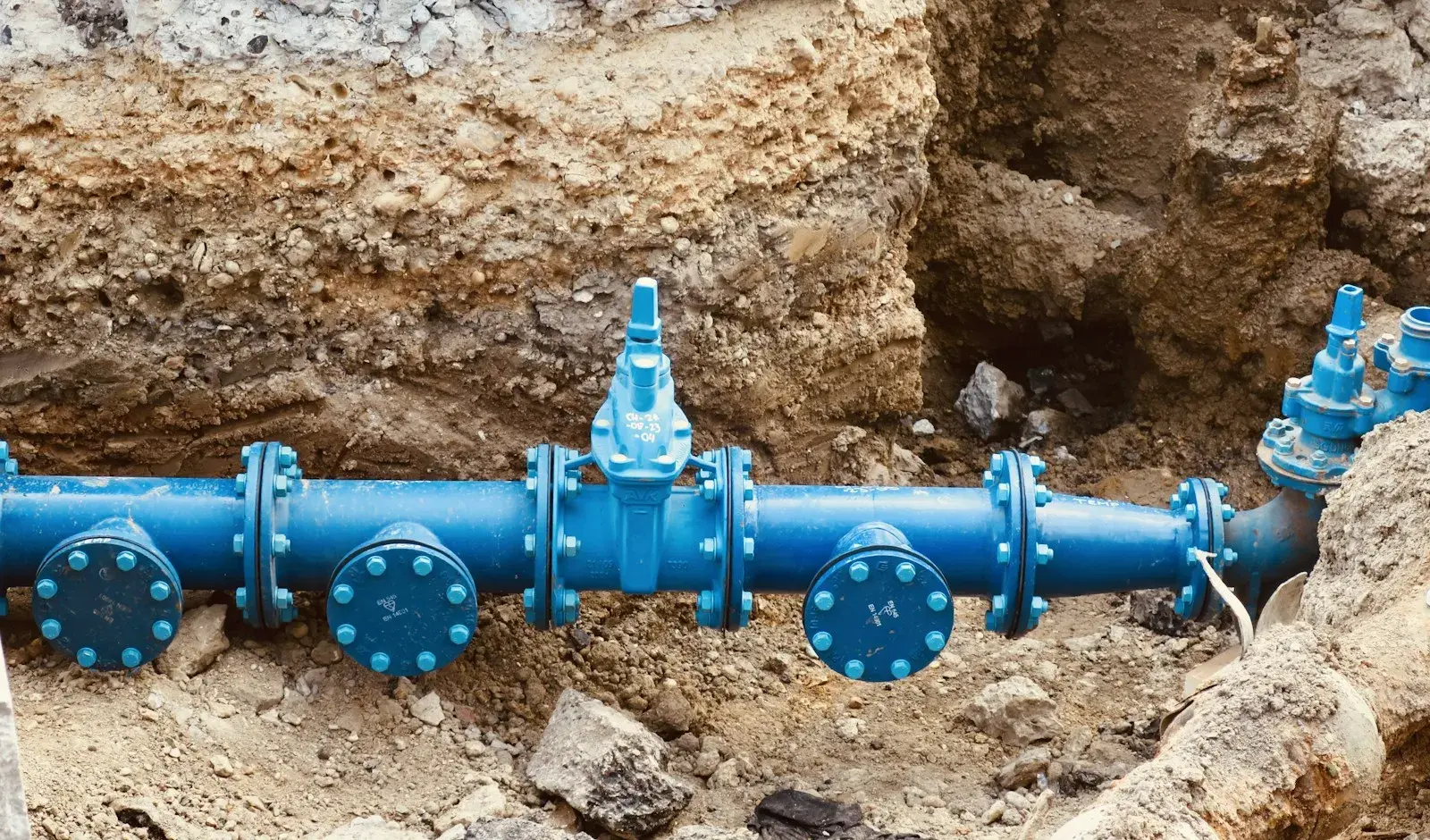
A water main with valves exposed in a trench. Lines like this usually sit in a utility easement, which limits what can be built on top of them. (Photo: Photo by Rose Galloway Green (@rgreen) on Unsplash · Unsplash License)
An easement is a right to use someone else's land for a specific purpose, without owning it. Cornell's Legal Information Institute defines it as a nonpossessory property interest that gives the holder permission to use another person's land. The landowner keeps title; the easement holder gets a defined use, such as running a sewer line, draining stormwater or crossing to reach a road.
On a development site, that legal definition turns into lines on a survey that decide where you can put a building, a retaining wall, a dumpster pad or a row of trees. This guide covers the easement basics, then the part most explainers skip: how engineers find easements, design around them and coordinate new or relocated ones.
This article is general information, not legal advice. Easement rights depend on the wording of the recorded instrument and Texas law. For questions about what an easement allows, whether it can be released, or what compensation is fair, talk to a Texas real estate attorney.
Easement basics in plain terms
A few terms come up again and again:
- Affirmative vs negative. Most easements are affirmative: they let the holder do something on the land (lay a pipe, drive across). A negative easement stops the owner from doing something otherwise lawful, such as building above a certain height.
- Appurtenant vs in gross. An appurtenant easement benefits a neighboring parcel and goes with that land when it's sold. An easement in gross benefits a person or company, which is how most utility easements work.
- How they're created. By express written grant or plat dedication, and in some situations by implication, necessity or long-term use (prescription). The rules for the last few are legal questions.
- How they end. Release by the holder, abandonment, merger of the two parcels, or the end of a necessity, among others. Again, a question for your attorney.
How easements show up on a development project
For engineers, easements come from three places:
- The plat. Under Texas Local Government Code §212.004, a plat of a subdivision within a city or its extraterritorial jurisdiction has to state the dimensions of each street, alley, park or other part of the tract intended to be dedicated to public use. Utility, drainage and access easements are commonly dedicated this way and drawn on the recorded plat.
- Separate instruments. Pipeline, electric transmission, telecom and private access easements are often granted by a recorded document, not shown on any plat.
- The title commitment. Recorded easements show up as exceptions in the title commitment. A boundary survey can then plot those it can locate.
A common problem is the blanket easement: an old pipeline or utility grant with no defined width or location. Those need attention early, because you can't design around a line nobody has drawn.
Types of easements on development sites and what they mean for design
| Easement type | Who typically holds it | Design implications |
|---|---|---|
| Water and sanitary sewer | City or utility district | No buildings or permanent structures over the line; access for maintenance; restrictions on trees and walls |
| Franchise utility (electric, gas, telecom) | Utility company | Same as above; separation from other utilities; transformer and pedestal locations |
| Drainage | City, county or property owner's association | Keep channels and swales open; no fill or fences that block flow; maintenance access |
| Detention / stormwater facility | Municipality or owner, by agreement | Defined maintenance access; long-term maintenance responsibility |
| Access / mutual access | Adjacent owner(s) | Drive aisle location fixed; shared maintenance |
| Fire lane | City, by dedication on plat | Width, turning radius and pavement strength set by fire code; must stay clear |
| Pipeline (private) | Pipeline operator | Crossing agreements; limits on cover changes, paving and heavy equipment |
| Highway right of way | TxDOT | Utility work needs a TxDOT permit under the Utility Accommodation Rules |
Requirements for a specific easement depend on its recorded terms and the holder's standards. Always read the instrument, not just the line on the survey.
Drainage easements in North Texas
Many North Central Texas cities base their stormwater criteria on NCTCOG's integrated Stormwater Management (iSWM) program. The iSWM Criteria Manual calls for easements on drainage systems that carry stormwater runoff across a development, with enough room for operation and maintenance, and for detention ponds and permanent stormwater controls to have easements negotiated between the city and the owner, with maintenance agreements. Each city adopts its own version, so read the local criteria manual for widths and access rules.
In practice that means a drainage channel through a subdivision usually sits in a drainage easement on the plat, and a commercial detention pond usually comes with a maintenance agreement that stays with the property.
Utility coordination for development projects
Easement and utility coordination is a large part of civil site work. The usual sequence:
- Identify everything. Title commitment exceptions, plat easements, the survey, utility provider maps and field evidence such as markers, manholes and valve boxes.
- Locate in the field. Request locates through the Texas811 one-call system before any digging, and use utility locating on the survey where depths and alignments matter.
- Decide: design around, cross, relocate or abandon. Crossing a pipeline usually needs the operator's crossing agreement. Relocating a public line needs the utility's approval of the new design and a new easement. Abandoning an unused public easement is typically handled by the city through its own process.
- Dedicate new easements. New water, sewer, drainage and franchise utility easements are drawn on the plat or granted by separate instrument, coordinated with the surveyor who prepares the plat.
- State highway frontage. Utility work in TxDOT right of way falls under the Texas Administrative Code's Utility Accommodation Rules (43 TAC Chapter 21, Subchapter C), which apply to new installations, adjustments and relocations, and need a TxDOT permit.
Who pays for a relocation depends on the easement terms and the agreements involved. That's a legal and contract question, not an engineering one.
When a utility needs an easement across your land
Sometimes the easement goes the other way: a utility or public entity wants a new easement across your property. Entities with eminent domain authority in Texas must follow Property Code Chapter 21. The Texas Attorney General's Landowner's Bill of Rights summarizes the process, including a bona fide offer with an initial and final offer, required disclosures such as the proposed conveyance instrument, and minimum timeframes before a condemnation proceeding can be filed. If you receive one of these offers, talk to a real estate or eminent domain attorney before you sign. An engineer can help you understand how the proposed easement affects your site's future development.
Development checklist for easements
- Get the title commitment early and have every easement exception plotted on the survey.
- Flag blanket or undefined easements and start talking to the holders.
- Overlay easements on the conceptual site plan before the layout is fixed.
- Check fire lane, drainage and utility widths against the city's criteria.
- Identify any crossings, relocations or abandonments and their approval paths.
- Coordinate new easement dedications with the surveyor preparing the plat.
- Confirm any TxDOT right-of-way permits needed.
- Send legal questions about rights, releases and compensation to a Texas real estate attorney.
Talk to Isbell Engineering Consultants about easement and utility coordination
Isbell Engineering Consultants lists easement and utility coordination as part of its civil engineering services, within utility infrastructure engineering (routing, extensions, relocations and connections) and subdivision engineering (streets, utilities, drainage, lots and easement coordination). If easements are shaping your site plan or a utility relocation is on the critical path, contact us. We'll handle the engineering side; for the legal side, bring in your real estate attorney. More about our work is on the services and FAQ pages.
Frequently asked questions
What is an easement in simple terms?
An easement is a right for someone else to use part of your land for a specific purpose, such as a utility line, a drainage channel or a shared driveway. You still own the land, but you can't interfere with that use.
Can I build on a utility easement?
Generally not with permanent structures, and the easement terms decide what's allowed. Utility holders typically need access to maintain their lines, and anything in the way may be removed at the owner's expense. Read the recorded easement and check with the holder and the city before building, and ask a real estate attorney if the terms are unclear.
Who maintains a drainage easement?
It depends on the plat, the easement instrument and local rules. Some cities maintain public drainage easements; others place maintenance on the property owner or an owners' association. Detention ponds often come with a recorded maintenance agreement.
Can an easement be removed?
Sometimes. The holder can release it, and public easements can sometimes be abandoned through a city process. Whether and how depends on the instrument and Texas law, so consult a real estate attorney.
How do I find easements on my property?
Check the recorded plat, the title commitment or title policy, and a current survey. County real property records hold separately recorded easements. For development, a surveyor can plot recorded easements and an engineer can show how they affect the site plan.
Sources
- Cornell Law School LII, Wex: Easement
- Texas Local Government Code §212.004, Plat Required (FindLaw)
- NCTCOG iSWM Criteria Manual (drainage easements, detention maintenance)
- Texas Administrative Code, Title 43, Chapter 21, Subchapter C, Utility Accommodation (§21.33 Applicability)
- TxDOT, Utility Accommodations Toolkit
- Texas Attorney General, The State of Texas Landowner's Bill of Rights (Property Code Chapter 21)
- Texas Property Code Chapter 21, Eminent Domain (Justia)
- Texas811 one-call notification center
Image credits
- A blue ductile iron water main with valves and fittings exposed in an open excavation. Photo: Photo by Rose Galloway Green (@rgreen) on Unsplash · Unsplash License
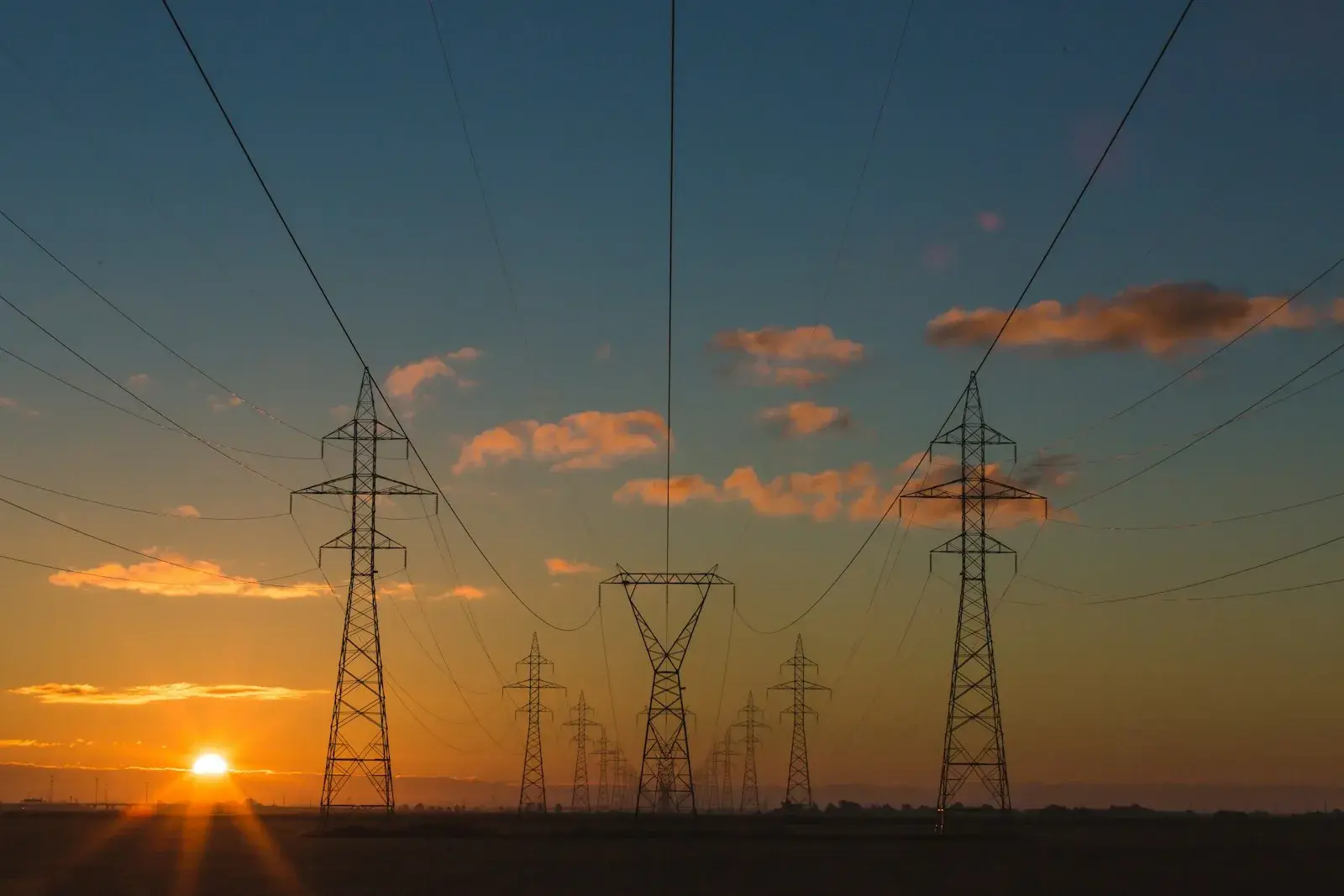
- Steel electric transmission towers and power lines crossing open land at sunset. Photo: Photo by Matthew Henry (@matthewhenry) on Unsplash · Unsplash License
Related articles
Copyright © 2026 Isbell Engineering Consultants - All Rights Reserved.
Made & Managed by North Texas Business Solutions