
Property Condition Assessment vs Structural Assessment: What a Commercial Buyer Actually Gets
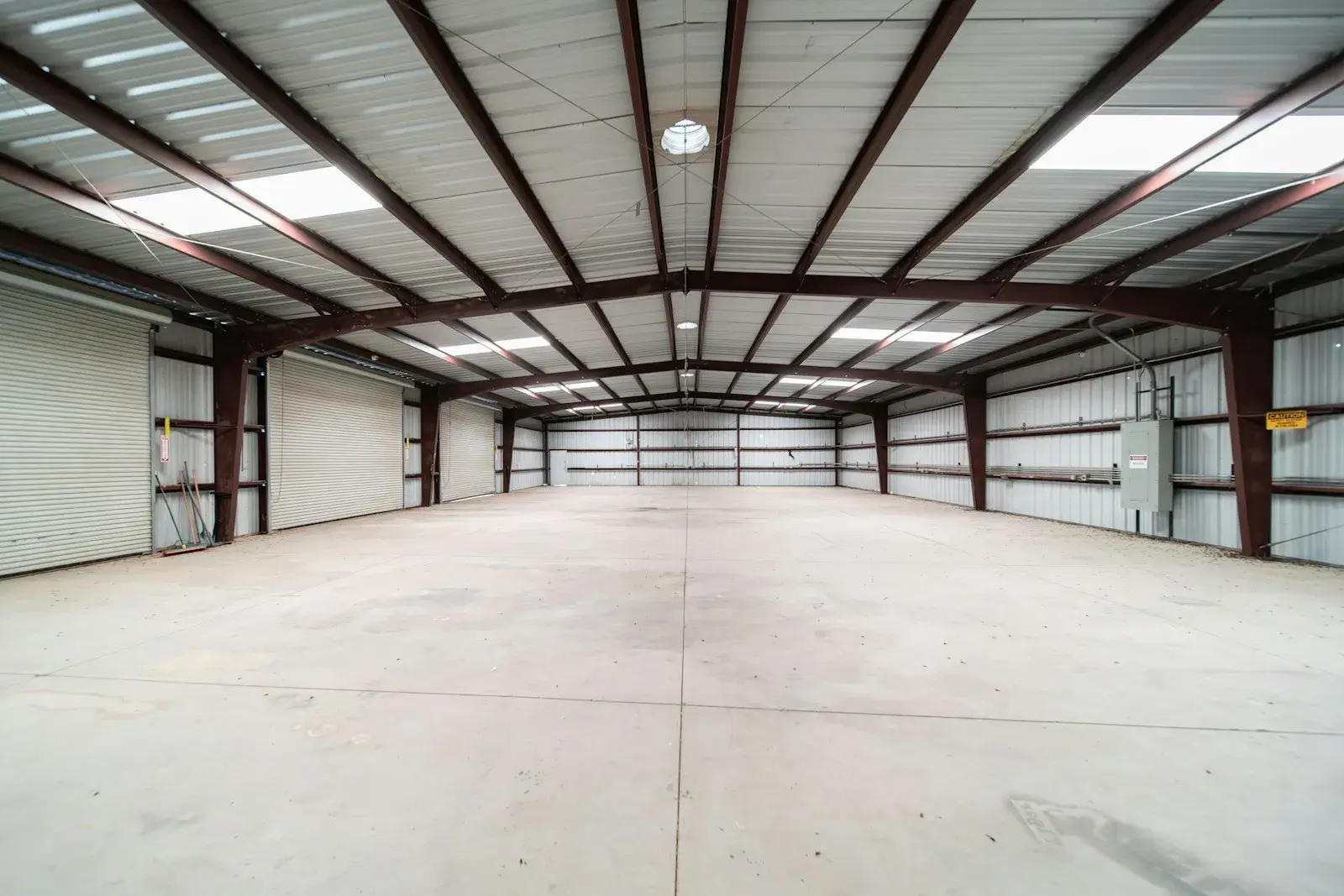
An empty steel-framed warehouse. A property condition assessment records what's visible here; a structural assessment checks whether the frame, roof and slab are actually performing. (Photo: Photo by Brian Wangenheim (@brianwangenheim) on Unsplash · Unsplash License)
A property condition assessment (PCA) tells you what a trained observer could see on a walk-through, what the records say, and roughly what the visible problems will cost to fix. It does not test, calculate or dig. That is by design: the ASTM E2018 standard frames a baseline PCA as a non-intrusive survey, not an engineering investigation.
So when the PCA comes back with a line like "cracking observed in slab-on-grade, recommend further evaluation by a structural engineer," that's the handoff point. This article explains what each report covers, where the gaps are, and how buyers, lenders and asset managers usually sequence the two.
What a property condition assessment covers under ASTM E2018
ASTM E2018-24 is the current edition of the standard guide for a baseline PCA on commercial real estate. It has four parts:
- Walk-through survey. A field observer looks at the readily accessible, easily visible systems: site and paving, structural frame and envelope, roofing, plumbing, HVAC, electrical, vertical transportation and life-safety systems. The observer doesn't move furniture, lift floor coverings or open concealed areas.
- Document review. Drawings, permits, certificates of occupancy, prior reports, warranties and maintenance records, where available.
- Interviews. Owner, property manager, maintenance staff and sometimes the building department or fire marshal.
- Property Condition Report (PCR). Findings plus opinions of probable cost, split into immediate costs and short-term costs.
The 2024 revision made a few practical changes. "Observe" now includes what the assessor hears and smells, not only what they see. Ancillary buildings such as maintenance sheds are no longer treated as primary improvements. And the immediate-costs category now says outright that it covers items needing prompt action, including life-safety issues, likely system failures and code violations.
What a PCA deliberately leaves out
The standard is explicit that a baseline PCA is not technically exhaustive. Out of scope, in plain terms:
- Engineering calculations to check whether a system or component is adequate for its loads or meets code.
- Exploratory probing, destructive testing or opening up finishes.
- Subsurface conditions, including soil type and behavior.
- Designing or specifying the repair.
- Environmental issues, which belong in a separate Phase I environmental site assessment.
None of that is a criticism of PCAs. A walk-through across a large building in a day or two is the right tool for a portfolio screen or a lender's file. It just isn't the right tool for deciding whether a cracked slab is a cosmetic shrinkage crack or a foundation problem.
PCA vs structural condition assessment vs structural evaluation
| Baseline PCA (ASTM E2018) | Structural condition assessment | Structural evaluation for a change | |
|---|---|---|---|
| Typical trigger | Acquisition, refinance, lender requirement | PCA flags, visible distress, aging building | New use, added equipment, renovation, expansion |
| Who performs | Field observer under a PCA consultant | Licensed structural engineer | Licensed structural engineer |
| Method | Visual walk-through, records, interviews | Close-up observation of the structure, measurements, sometimes material sampling | Load path review, calculations against current code loads |
| Calculations | No | Limited, where needed to judge severity | Yes |
| Below-grade information | No | Coordinated with a geotechnical engineer when foundations are in question | Coordinated with a geotechnical engineer when foundation loads change |
| Deliverable | Property Condition Report with cost opinions | Sealed report on condition, cause and recommended repairs | Sealed report or drawings showing what the structure can carry and what must change |
When to add a structural engineer to the deal
Bring in a structural engineer when the PCA or your own walk-through turns up any of these:
- Slab cracks with vertical offset, heaving or sloping floors.
- Columns or walls out of plumb, or doors and overhead doors that bind.
- Roof framing with visible sag, ponding on a low-slope roof, or rust at bearing points and connections.
- Masonry cracking in stair-step patterns, or brick ties and lintels showing rust staining.
- Corrosion at the base of steel columns, especially near dock doors or wash-down areas.
- Prior repairs with no engineering paperwork behind them.
- Plans to add rooftop units, solar arrays, a mezzanine, taller racking or a crane.
That last group matters because it moves the question from "what condition is it in" to "what can it carry." Under the 2021 International Existing Building Code (§1006), when a change of occupancy brings higher live loads, structural elements carrying those loads generally have to meet the current IBC live-load requirements, with limited exceptions. A PCA won't answer that. Calculations will.
Warehouse and industrial buildings: what a walk-through can only flag
Industrial and logistics buildings have issues that look minor on a walk-through and turn out to be expensive:
- Slabs on expansive clay. North Texas has widespread highly plastic clay. USDA NRCS describes the common Houston Black series as a clay that cracks widely and deeply as it dries. The 2021 IBC (§1803.5.3) classifies soil with a plasticity index of 15 or more, plus other index criteria, as expansive. A PCA observer can note slab cracking and joint displacement, but explaining the movement needs soil data and someone who can read it.
- Racking. Racking anchors, base plates and the slab under them carry concentrated loads. Damaged uprights and cracked slab at anchor points are common findings.
- Roof framing. Light-gauge purlins and joists in pre-engineered metal buildings often have little spare capacity. Added rooftop equipment or solar needs a check.
- Crane runways and process loads. These are outside the normal PCA scope and need their own review.
An acquisition timeline that keeps the structural work on track
- Letter of intent signed: order the PCA and Phase I ESA. Ask the PCA consultant to flag structural items clearly.
- Early in due diligence: review the draft PCR the day it arrives. Anything flagged for "further evaluation" should go to a structural engineer that week, not at the end of the period.
- Structural site visit: the engineer looks at the flagged areas closely, measures, photographs, and asks for drawings and prior reports.
- Geotechnical input if foundations are involved: a few borings and lab tests can tell you whether slab movement is likely to continue.
- Report and cost of remedies: use the engineer's findings to firm up the PCA cost opinion, renegotiate or set aside reserves.
- Before closing: confirm any planned changes (new equipment, change of use) are covered by the structural review.
Talk to Isbell Engineering Consultants about a condition assessment
Isbell Engineering Consultants lists condition assessments of existing buildings and structural integrity evaluations among its structural engineering services, and works on commercial, industrial, warehouse and municipal buildings. When foundation movement is part of the question, our geotechnical engineering services team can add borings and lab testing. If you're in due diligence and a PCA has flagged structural items, contact us with the report and drawings and we'll scope the follow-up. You can also see the full range on our services page.
Frequently asked questions
What is a property condition assessment?
A PCA is a due-diligence review of a commercial property's physical condition. Under ASTM E2018 it combines a walk-through survey, document review and interviews into a Property Condition Report that lists observed deficiencies and opinions of probable cost to address them.
Is a property condition assessment the same as a structural inspection?
No. A PCA is a visual survey of all major building systems by a field observer. A structural assessment is done by a licensed structural engineer, focuses on the structure, and can include measurements, calculations and coordination with geotechnical testing.
Does a PCA check the foundation soil?
No. Subsurface conditions such as soil type and behavior are outside the scope of a baseline PCA. If the report notes slab or foundation movement, a geotechnical investigation is the way to understand the soil.
What changed in ASTM E2018-24?
The 2024 edition expanded "observe" to include hearing and smell, removed ancillary buildings like maintenance sheds from the primary improvements, and clarified that immediate costs include life-safety items, likely system failures and code violations.
When should a buyer hire a structural engineer during due diligence?
As soon as the PCA, the seller's disclosures or your own walk-through show structural distress, undocumented past repairs, or when you plan a change of use or added loads. Starting early leaves time for testing and for using the findings in negotiations.
Sources
- ASTM E2018-24, Standard Guide for Property Condition Assessments: Baseline Property Condition Assessment Process
- What Is ASTM E2018-24? The PCA Standard Explained (summary of 2024 revisions)
- 2021 International Existing Building Code, Chapter 10 Change of Occupancy (§1006 structural)
- 2021 International Building Code, Chapter 18 Soils and Foundations (§1803.5.3 expansive soil)
- USDA NRCS Official Series Description, Houston Black series
Image credits
- Interior of an empty steel-framed warehouse with exposed rigid frames, roof purlins and a concrete slab floor. Photo: Photo by Brian Wangenheim (@brianwangenheim) on Unsplash · Unsplash License
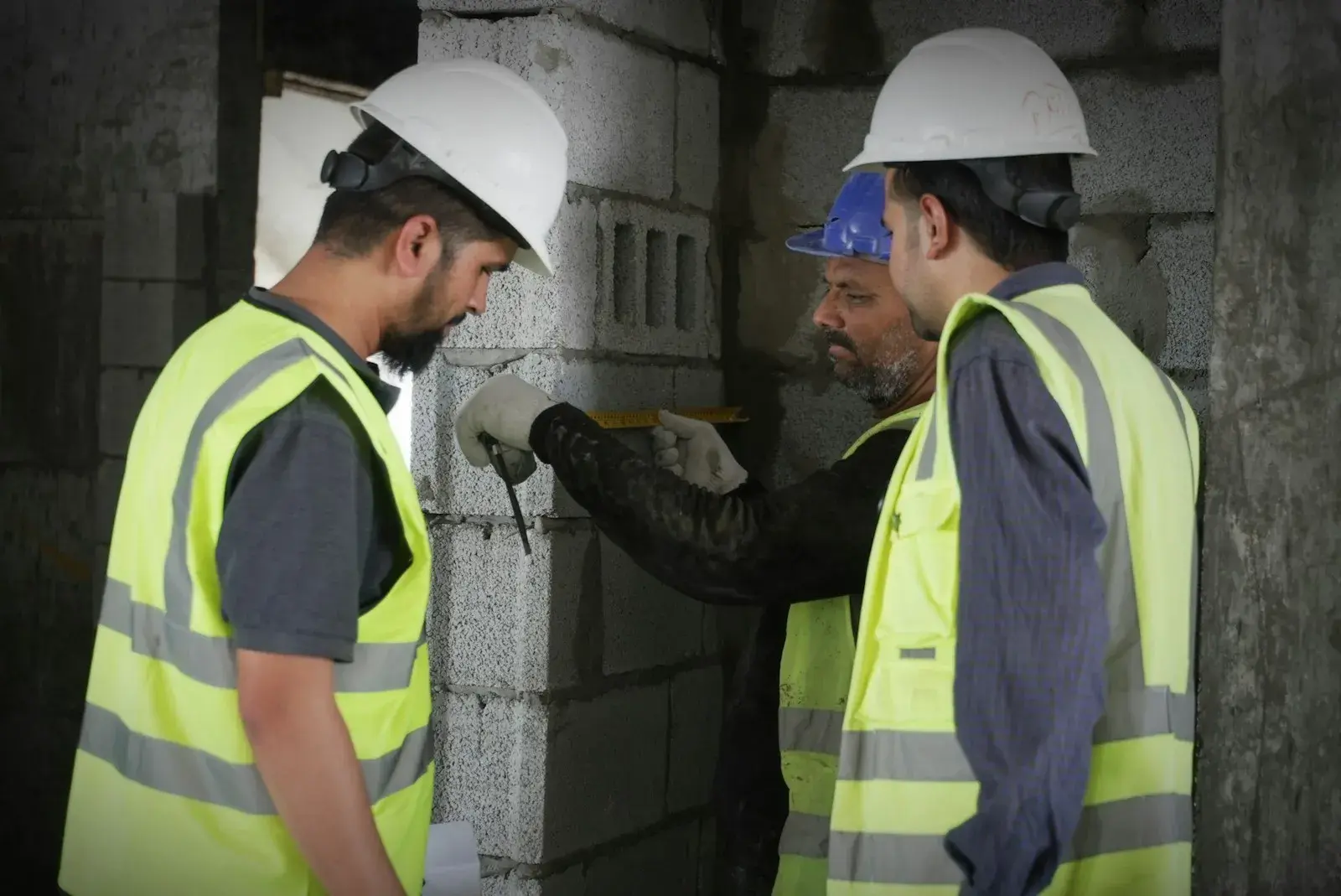
- Three workers in hard hats and high-visibility vests measuring a concrete block wall. Photo: Photo by Glenov Brankovic (@glenovbrankovic) on Unsplash · Unsplash License
Related articles
- Delegated Design and Deferred Submittals: Who Engineers What on a Commercial Project
- Shoring in Construction: The Main Types, the OSHA Lines, and When an Engineer Has to Design It
- Structural Health Monitoring for Commercial Buildings: What to Measure, How Long, and What the Readings Mean on North Texas Clay
Copyright © 2026 Isbell Engineering Consultants - All Rights Reserved.
Made & Managed by North Texas Business Solutions